
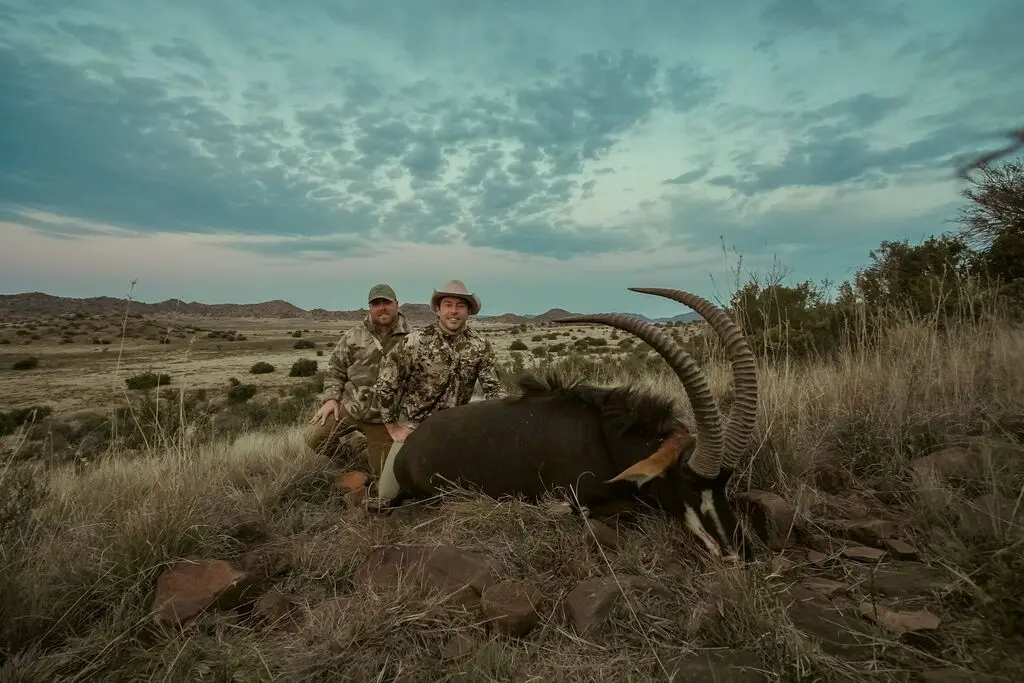
The short version: go to South Africa in the southern winter - roughly May through September. Plan seven to ten days and expect to take four to six plains game animals. Most plains game country is malaria-free. You do not have to bring a rifle. And it will cost less than most hunters assume, though not less than the cheapest quote you will find.
South Africa is where the overwhelming majority of first African safaris happen, and there are good reasons for that rather than just inertia. Here is the whole plan, in the order you actually need to decide things.
Why South Africa first
Game density is high. You will see animals every day, in numbers that surprise people whose reference point is a western elk hunt.
The infrastructure works. Established lodges, good roads, direct flights, functioning logistics for trophies. There is a real difference between a first safari and an expedition, and South Africa is firmly the former.
English is spoken everywhere. Your PH, the lodge staff, the shipping agent - all of it happens in English.
Most plains game areas are malaria-free. More on this below, because it is the question that stops more first-timers than any other.
It is affordable relative to what it is. A plains game safari costs a fraction of a dangerous game hunt and, honestly, less than a lot of guided North American hunts once you account for how many animals you take.
And you can hunt genuinely spectacular animals. Kudu is the one most hunters build the trip around, and it deserves it.
When to go
The prime window is the South African winter: roughly May through September.
What that buys you:
- Thinner bush. Deciduous cover drops, and visibility in thornveld improves dramatically. This is the single biggest factor.
- Cool days. Comfortable walking weather. Mornings can be genuinely cold - bring a jacket, hunters never believe this.
- Game concentrated at water. Dry season means predictable movement.
- Winter coats. Animals look their best.
June through August is the heart of it. May and September are excellent shoulder months and often easier to book.
The southern hemisphere seasons being inverted is the whole trick: their winter is your summer. That means a safari slots into June, July or August without touching a North American season, which is why it fits so cleanly alongside a Texas calendar.
How long, and how many animals
Seven to ten hunting days is the standard first safari, and the arithmetic is straightforward: figure roughly a day and a half per animal for plains game, plus travel.
- 7 days: 3-5 animals. A solid first trip.
- 10 days: 5-7 animals. The sweet spot if you can manage the time.
- Under 5 days: possible, but you will feel rushed and you will pay travel costs against very few hunting days.
Add two travel days each way. Most US hunters fly into Johannesburg (O.R. Tambo) and are met there.
Be realistic about pace. It is tempting to build a list of ten species; it is more satisfying to take six good animals than to chase a checklist.
What to hunt
The classic first-safari list, more or less in order of how often hunters build the trip around them:
Kudu - the “grey ghost,” spiral horns, the animal most hunters come for. Big-bodied, wary, and living in exactly the thick cover that makes them hard. If you take one animal in Africa, take this one.
Gemsbok - heavy, striking, tough, and at home in open country. Both sexes carry horns. A genuinely challenging stalk.
Blue wildebeest - the “poor man’s buffalo.” Hard to put down and worth the respect.
Impala - the animal you will see most and underestimate most. Beautiful, fast, and an excellent introduction to African shooting.
Blesbok - open-country hunting, longer shots, plentiful and affordable.
Nyala - arguably the most beautiful antelope in Africa. Thick riverine cover.
Warthog, zebra, waterbuck, springbok, bushbuck, eland - all good, all common on a first list. Eland is the largest antelope in the world and hunters consistently underestimate what that means.
Sable and Cape buffalo are available for hunters who want to step up. Buffalo is a different category of hunt and a different budget; it is not a first-safari animal for most people, though some do it.
Our full list is on the African species page.
What it costs
Plains game safaris are priced the same way as Texas exotics: a daily rate covering accommodation, meals, PH, trackers, skinners and field prep, plus trophy fees per animal taken.
Market daily rates for South African plains game generally run in the region of $400-$500 per hunter per day, with 2×1 (two hunters sharing a PH) cheaper per person than 1×1. Trophy fees vary widely by species and area - impala, blesbok and warthog sit at the low hundreds; kudu, nyala and eland run into the low thousands; sable and buffalo well beyond.
Those are indicative market ranges to help you build a budget, not our quote. We quote South Africa per itinerary, because the right answer depends on your species list, your dates, the area and how many are in your party. Call and we will put a real number in writing. Our Texas pricing, by contrast, is published in full on the pricing page.
Budget separately for: international flights, tips, dip-and-pack, shipping, taxidermy at home, and a rifle permit if you bring your own.
A word on prices. These numbers are current as of 2026 and they do move. Animal values change, a hard freeze or a drought changes what a ranch can carry, and market conditions do what they do. Treat this as a planning guide rather than a quote - call me at 830-928-5426 and I’ll shoot you straight on what your hunt costs today.
Malaria - the real answer
Malaria risk in South Africa is regional, not national.
Risk is concentrated in the Lowveld of Mpumalanga and in Limpopo, including the Kruger area and adjacent private reserves, and on the Maputaland coast of KwaZulu-Natal. The elevated-risk window in those areas runs roughly October to May - which is outside the prime hunting season anyway.
Large parts of the country carry no meaningful risk at all, and a great deal of plains game hunting happens in those areas.
The practical approach: ask your outfitter exactly which province and area you will be hunting, then take that to a travel medicine clinic and let a doctor advise you. Do not rely on an outfitter - including me - for a medical decision. What we can tell you precisely is where you will be, and that is the input the doctor needs.
Rifles: bring one or borrow one
You have two options and neither is wrong.
Bring your own. You will need a SAPS 520 temporary import permit. It is free, it is not difficult, and the details matter - one firearm per calibre, a 200-round ammunition limit, no semi-automatics, and specific certified documents. The full process is in our SAPS 520 guide.
Borrow one. Rifles can be provided on request, which removes the permit process, the airline firearm handling and the risk of your rifle arriving three days after you do. A great many first-timers take this option and are glad of it.
Calibre-wise, plains game is comfortably handled by .30-06, .300 Win Mag, 7mm Rem Mag or similar. Bring good bullets; that matters more than the calibre debate.
Trophies: what actually happens
This is the part first-timers know least about.
- Field prep in camp. Skinning and caping happen immediately - the skinners in a good camp are extremely good at this.
- Dip and pack. Your trophies go to a facility that treats and packs the skins and horns to meet import requirements. This takes time - months is normal, not a problem.
- Shipping. A freight agent handles export documentation and ships the crate to a port of entry near you.
- Customs clearance in the US.
- Your taxidermist takes delivery and does the mounts.
Total elapsed time from hunt to mount on wall is commonly 8 to 18 months. Anyone who promises much faster is guessing.
Import requirements vary by species, and CITES-listed species carry extra paperwork. Rules do change - check the current US Fish and Wildlife Service position for any species you plan to take, well before you go, and make sure your outfitter has done the same.
What to pack, briefly
Muted earth tones, broken-in boots you have already walked in, a warm jacket for the mornings, sun protection, binoculars you trust, and less than you think. Laundry is generally done daily in camp. Full list on our what to pack page.
Common questions
Is South Africa safe? Hunting areas are rural and hunters travel with the operator throughout. Ordinary travel caution in Johannesburg applies as it would in any large city.
Do I need to be fit? Reasonably. This is walking country - several miles a day, uneven ground, occasionally at pace. You do not need to be a mountain athlete.
Can I bring a non-hunter? Yes, and they generally have a better time than they expect. Observer rates apply.
How far are the shots? Typically 80-250 yards. Practise from sticks - nearly all African shooting is off sticks and almost no American hunters have done it.
Will I actually get a kudu? In good country in the right season, with the days for it, most hunters do. Nobody honest guarantees an animal.
More on the FAQ page.
Getting started
If you are somewhere between “I’ve always wanted to” and “I’m ready to book,” call and describe your window and your list. I will tell you what is realistic for the days you have.
Dalton Bannister - 830-928-5426, or use the contact form.
Related: choosing an outfitter you can trust and why book through a Texas outfitter.