
The short version: if you want the most exciting hunt, come for axis in June or July. If you want the hardest stalk, hunt blackbuck. If you want the most physical hunt, hunt aoudad. If you want the most impressive animal on the wall for the money, hunt scimitar-horned oryx. If you want a European-style trophy in the rut, hunt fallow.
The species list at our Hill Country page runs long, and for a first-timer that is more paralyzing than helpful. Here is how I actually talk hunters through it on the phone.
Start with the two questions that matter
When can you travel? This narrows the list faster than anything. Summer means axis. Cool weather opens up nearly everything else.
What do you want out of it - the hunt, the animal, or the meat? These point in different directions and people are often not honest with themselves about which they want.
Axis deer - $6,000
Hunt it if: you want the best all-round experience, and especially if you can come in summer.
Axis are the most abundant exotic in Texas - over 15,000 free-living animals, introduced around 1932, thick through the Hill Country including Kerr and Kimble counties. They are also, in my opinion, the best exotic hunt available anywhere in the state.
The rut runs mid-May through August with a June-July peak, and a rutting axis buck barks - a strange, carrying, high call you can hunt by ear at first light. Nothing else in Texas does that. Because axis cycles are not synchronized, hard-antlered bucks exist in every month, so an off-season axis hunt is legitimate; it is just less theatrical.
Difficulty: moderate to hard. Excellent noses, wary, and they melt into cover rather than bolting from it.
The meat: the best venison in Texas. Not a close contest. Even hunters who normally leave the meat take axis home.
The catch: summer in the Hill Country is hot. Early mornings, late evenings, and disciplined field care.
Full detail in the axis season guide.
Blackbuck - $5,000
Hunt it if: you want the hardest stalk on the list, and the most striking animal.
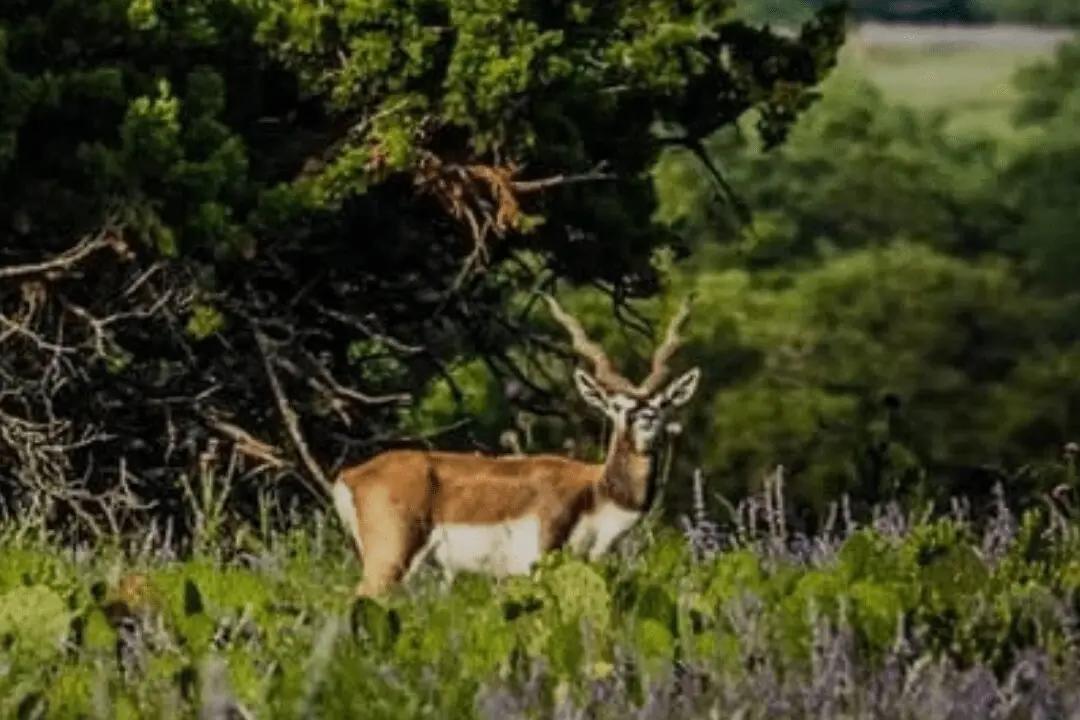
A mature blackbuck buck in breeding condition is nearly black above and sharp white below, with corkscrew horns - one of the most visually dramatic animals in North America, and it lives an hour from San Antonio.
There is a nice piece of history here: blackbuck were released in the Edwards Plateau in Kerr County in 1932 - where I am based - and today more than 80% of the roughly 20,000 blackbuck in Texas are still on the Edwards Plateau. This is the animal’s American home range.
Difficulty: the hardest of the common exotics. Blackbuck have exceptional eyesight, live in open country, and run rather than hide. Stalks fail at four hundred yards routinely.
Timing: bucks breed year-round but are most active spring and fall. Coat colour matters for the photographs - males are blackest in breeding condition and lighten considerably after the spring molt. If you want the dramatic black animal, avoid mid-summer.
Horns: Texas blackbuck rarely exceed about 23 inches, so the difference between a good one and a great one is a couple of inches and requires a guide who knows the herd.
The catch: it is the cheapest trophy fee on the list and the most likely to have you go home empty. That is the trade.
Aoudad - $6,500
Hunt it if: you want the most physically demanding hunt and you are in shape for it.
Aoudad are Barbary sheep, at home in the roughest, steepest, most broken country available. They have superb eyesight, live in herds with a lot of eyes, and hold on ground that is genuinely unpleasant to climb.
Difficulty: the hardest work on the list, physically. This is a sheep hunt in Texas.
Timing: cool months. Do not do this in July.
Note: we also run West Texas aoudad hunts, which are a different animal entirely - bigger country, free-ranging, priced separately at $8,500 one-on-one and $7,500 two-on-one, and daily rates do not apply. See the West Texas page. The Hill Country aoudad hunt is the more accessible version.
The trophy: flaring horns and that chaps-and-mane look. Distinctive on a wall in a way few animals are.
Fallow deer - $8,500
Hunt it if: you want palmated antlers and a genuine rut experience in cool weather.
Fallow bucks carry broad palmated antlers like a miniature moose, and they groan during the rut - a deep, guttural sound that carries a long way through the oaks. The rut falls in autumn, which makes fallow the natural counterpart to a summer axis hunt.
Difficulty: moderate. Fallow herd up, which gives you more animals to work but more eyes to beat.
Timing: autumn, for the rut and for the weather.
The animal: varies from near-white to almost black, which is worth thinking about before you pick one. Tell your guide what colour phase you want.
Scimitar-horned oryx - $8,500
Hunt it if: you want maximum visual impact per dollar.
Long swept-back horns on both sexes, white body, rich chestnut neck. It is a spectacular animal and it does not look like anything else that can be hunted in the United States. Extinct in the wild for decades and re-established through captive breeding, including on Texas ranches - one of the more interesting conservation stories in the sport.
Difficulty: moderate. They favour open country and are alert, but they are large-bodied and less neurotic than blackbuck.
Timing: cool months, for comfort more than for the animal.
The catch: at $8,500 it is a step up in cost from axis or blackbuck. Worth it if the mount is the goal.
The rest, briefly
Red stag - the European counterpart to elk, and they roar in the autumn rut. Priced on request; if this is what you want, call.
Mouflon and red sheep - $7,500 each. Wild sheep hunts in accessible country. Good pairing with aoudad for someone building a sheep collection.
Japanese sika - $5,500. Small, extremely wary, vocal in the rut and outstanding on the table. Underrated.
Bison - $10,000. Not a stalk in any meaningful sense, but a genuinely large animal and an enormous amount of exceptional meat.
Super exotics - $7,500 to $50,000. Nilgai, springbok, blesbok, waterbuck, addax, gemsbok, kudu, roan, sable, bongo and more. Full list on the super exotics page and on pricing. Most first-timers should not start here, with one honest exception: if you have always wanted a kudu or a sable and the African trip is not happening this decade, Texas is a legitimate way to get one.
Stacking species on one trip
Since exotics have no closed season, no bag limit and no tags, there is nothing stopping you taking three animals in four days. The daily rate covers the days; each trophy fee covers each animal.
A word on prices. These numbers are current as of 2026 and they do move. Animal values change, a hard freeze or a drought changes what a ranch can carry, and market conditions do what they do. Treat this as a planning guide rather than a quote - call me at 830-928-5426 and I’ll shoot you straight on what your hunt costs today.
The best mixed-bag window is fall through winter, when aoudad, fallow, oryx, mouflon and stag all hunt well and the weather cooperates. November through early January adds Texas whitetail, which is the only overlap available. See the whitetail page.
Summer is an axis-focused trip. That is not a limitation so much as a different kind of trip.
My actual recommendation
For most first-time exotic hunters: axis in June or July, or axis plus one cool-weather species in November. Best hunt, best meat, most abundant animal, most forgiving budget. Then come back for blackbuck once you have seen the country, because blackbuck will humble you and it is more fun to be humbled on the second trip than the first.
If you tell me when you can travel and what you want on the wall, I will tell you what to hunt - including if the answer is “not this month.”
Dalton Bannister - 830-928-5426, or get in touch. Costs are itemized in the 2026 pricing breakdown, and the legal picture is in Exotic Hunting in Texas.