
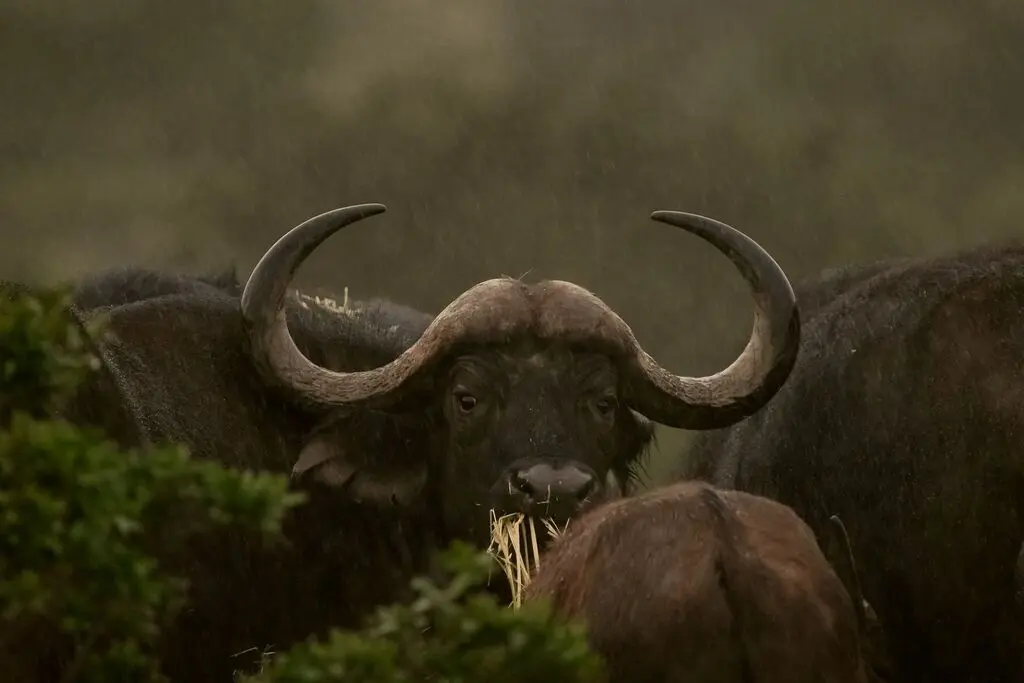
The short version: the Eastern Cape contains six of South Africa’s seven ecological biomes. In one province you can hunt mountain country for kudu and eland, open grassland for gemsbok and blesbok, dense riverine bush for bushbuck, and arid Karoo thornveld where the wind and the distance make you earn every animal. That variety is the reason we hunt here, and it is why hunters see far more of South Africa on this trip than they expect to.
This is where our South African operation is based, alongside professional hunter JP Kleinhans. Here is what the country is actually like.
Getting there
Hunters fly into Port Elizabeth, usually via Johannesburg. It is a small airport, which after fourteen hours in the air is a mercy. We meet you there, and the lodge is about an hour’s drive.
The drive is the first surprise for most first-timers. You roll through ordinary city - car dealerships, mechanic shops, grocery stores - and then the country opens up. This is citrus farming country, and there are huge pale covers stretched over the orchards that from a distance look like something out of the wrong hemisphere entirely.
The six biomes, and what lives in each
This is the part that makes the province worth a plane ticket. Within a few hours’ drive:
Valley bushveld and acacia woodland. Thick, thorny, low cover along river valleys. This is classic kudu country - a big-bodied animal with spiral horns that has a genuine talent for evaporating into cover you were looking straight at. Nyala and warthog use the same ground.
Savannah grassland and open plains. Longer sightlines, longer shots, and the animals that suit them: gemsbok, blesbok, springbok, red hartebeest, blue wildebeest, impala. This is where hunters who have only ever shot from a stand discover what shooting off sticks at 200 yards feels like.
Mountain country. Steep, high, and physical. Eland - the largest antelope in the world, and consistently underestimated by hunters who have not seen one up close - plus grey rhebok for those chasing something genuinely difficult. You glass this country the way you would glass Colorado.
Riverine forest and dense bush. Dark, tight, and slow. Bushbuck live here and they are among the most respected animals in Africa for good reason: small, sharp, and entirely willing to take exception to being wounded.
Fynbos. The Cape’s distinctive shrubland, found nowhere else on earth at this scale. Not the most productive hunting ground, but worth seeing.
Karoo thornveld. Semi-arid, open, and windy. On our trips this is often where gemsbok come from, and where the wind does things to a bullet that Texas hunters have to be talked through. If a professional hunter tells you to hold on the neck, hold on the neck.
What you can expect to hunt
A typical Eastern Cape list runs: greater kudu, gemsbok, blue wildebeest, impala, blesbok, nyala, bushbuck, waterbuck, springbok, red hartebeest, zebra, eland and warthog, with sable and Cape buffalo available for hunters who want to step up.
Kudu is the animal most hunters build the trip around, and it deserves that. A seven to ten day safari typically takes four to six animals. Full detail is on the African species page.
When to come
May through September is the window. That is the South African winter, which means:
- Thinner bush. Deciduous cover drops and visibility in valley bushveld improves dramatically. This is the single biggest factor.
- Cool days. Comfortable walking weather. Mornings can be genuinely cold - bring a jacket. Hunters never believe this until they are standing in one at first light.
- Game concentrated at water. The dry season makes movement predictable.
- Winter coats. The animals look their best.
June through August is the heart of it. May and September are strong shoulder months and easier to book. Some operators will tell you March and April are fine, and they can be, but the bush is thicker.
Dalton is in South Africa for essentially all of July and August, and those weeks go first. If 2027 is on your mind, the conversation to have is now.
Malaria - the honest answer
The Eastern Cape is not a malaria area. Risk in South Africa is concentrated in the Lowveld of Mpumalanga and in Limpopo, including the Kruger region, and along the Maputaland coast of KwaZulu-Natal, with the elevated window running roughly October to May.
That removes the single biggest worry most first-time hunters arrive with, and it is a large part of why the Eastern Cape is such a common first safari. Take the specifics to a travel medicine clinic rather than relying on any outfitter, including me - what we can tell you precisely is where you will be, which is the input the doctor needs.
How a trip is actually built
We do not park you on one property for ten days. A typical trip moves across several concessions, chosen for what you want to hunt and what is currently on the ground. Hunters on our trips regularly hunt six to eight distinct farms and concessions in a week and a half.
For a hunter who likes to see country, that is the whole appeal. Each one hunts differently.
Camp is a working lodge, not a hotel: full-time staff, indoor and outdoor living areas, and a rhythm that starts with coffee by the fire before light and ends with everyone telling the day back to each other after dinner. The protein at dinner comes from the animals taken that week. Nothing is wasted.
Rifles
You do not have to bring one. We can provide a rifle on request, which removes the permit process, the airline handling and the risk of your rifle arriving three days after you do.
If you would rather bring your own, you will need a SAPS 520 temporary import permit - free, not difficult, but specific. The full process is in our SAPS 520 guide.
Whatever you shoot, practise off tripod sticks, standing, before you come. Almost all African shooting is done that way and almost no American hunters have done it.
What it costs
Plains game is priced as a daily rate plus trophy fees per animal taken. Market daily rates for South African plains game generally run in the region of 400 to 500 US dollars per hunter per day, with two hunters sharing a PH cheaper per person than one-on-one. Trophy fees range from the low hundreds for impala, blesbok and warthog to the low thousands for kudu, nyala and eland, and well beyond for sable and buffalo.
Those are indicative market ranges, not our quote. We price South Africa per itinerary because the honest number depends on your species list, your dates and your party. I break the whole structure down in what a South African safari really costs.
A word on prices. These are current as of 2026 and they do move. Animal values change, conditions on the ground change, and exchange rates do what they do. Treat this as a planning guide rather than a quote - call me at 830-928-5426 and I’ll shoot you straight on what your trip actually costs.
Start here
If this would be your first African hunt, read the complete first safari plan next, and how to vet an outfitter after that.
When you are ready, tell us your window or call Dalton at 830-928-5426.