
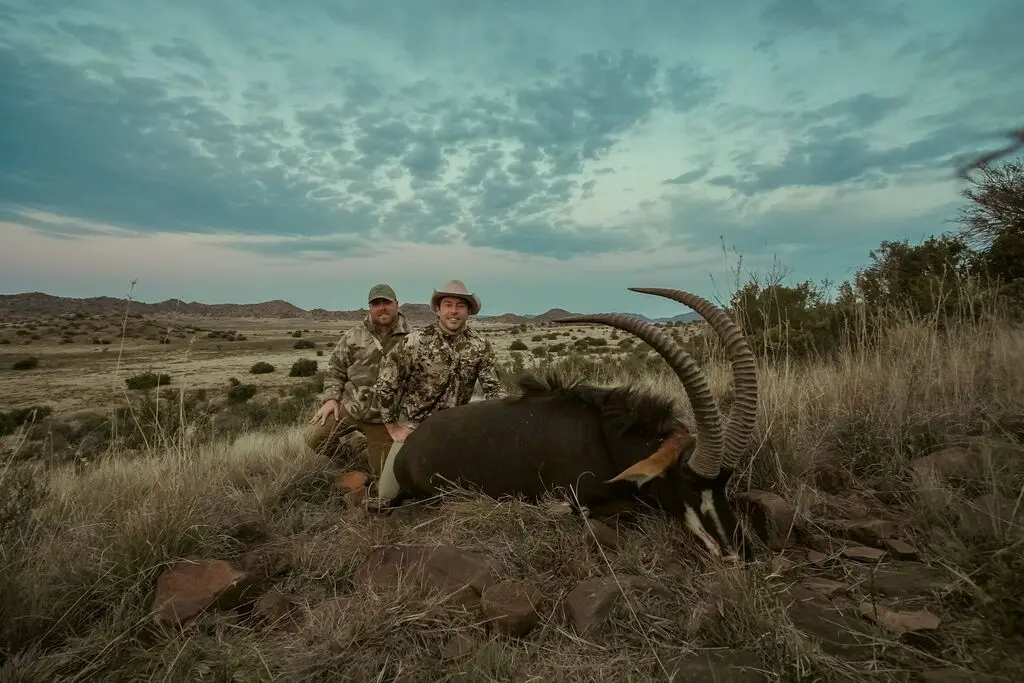
The short version: figure roughly a day and a half of hunting per animal. Seven days takes three to five plains game animals, ten days takes five to seven, fourteen days gets you into specialist species and a genuinely unhurried trip. Add two travel days each way. If you can only do one, ten days is the trip most hunters should book.
This is the question I get more than any other, and it is the one hunters most often get wrong in both directions.
Why days, not animals
Most people start with a species list and work backwards. That is the wrong end.
You cannot buy animals on a schedule. You can buy days, and days convert into animals at a rate that depends on the species, the country and your luck. An impala might take a morning. A good kudu can take four days, and I have watched hunters spend a week on one and go home happy anyway.
So the honest planning unit is hunting days, and the honest ratio is about 1.5 days per animal across a mixed plains game list. Build from there.
Seven days
Realistic take: three to five animals.
This is the shortest trip worth flying to Africa for, and it works. Where it gets tight is if kudu is on the list - the single most likely animal to eat three or four of your seven days. Hunters who book seven days and want kudu plus five others usually go home with kudu and two others, and a slight feeling of having been rushed.
Book seven days if: you are on a hard time constraint, you have a short list, or you have hunted Africa before and know exactly what you want.
Rough safari cost at 2×1: around $8,000-$9,000 including four animals, before flights and shipping.
Ten days
Realistic take: five to seven animals.
This is the sweet spot and it is what I recommend unless something rules it out. Ten days gives you room for a kudu to take its time, room to pass on the first gemsbok you see, and a couple of spare days at the end that hunters almost always end up using for something they did not plan.
It also changes the character of the trip. Seven days is a hunt. Ten days is a trip - there is time to move across several properties, time for a slow lunch, time to sit around the fire and hear the other hunters’ days. On our trips hunters commonly hunt six to eight distinct farms and concessions across a stay this length.
Book ten days if: it is your first safari, you want kudu, or you are bringing someone who is not hunting.
Rough safari cost at 1×1: around $13,000-$15,000 including six animals, before flights and shipping.
Fourteen days
Realistic take: eight to ten animals, or fewer animals hunted properly.
Two weeks opens up two different trips. One is a big list - you can genuinely take ten animals in fourteen days without hurrying. The other, which I think is the better trip, is a normal list plus a specialist species: eland, which is a lot of animal and a lot of walking; bushbuck, which lives in cover thick enough to make you work; or sable, if the budget stretches.
Fourteen days is also the length at which adding Cape buffalo starts to make sense, because buffalo deserves its own days rather than being squeezed onto the end of a plains game hunt.
Book fourteen days if: you want a specialist species, you are travelling a very long way and want it to count, or you are the kind of hunter who would rather do one thing thoroughly.
Add the travel
Whatever you book, add two days each way. From Texas that is realistically:
- Day 1: fly out, overnight to Johannesburg
- Day 2: connect to Port Elizabeth, drive to camp, sight in the rifle, hunt the afternoon
- Days 3 onward: hunting days
- Final day: drive out, connect, overnight flight
- Following day: land in the US
So a “ten-day safari” is about fourteen days off work. Hunters underestimate this constantly and then book a Monday meeting they cannot make.
One thing worth knowing: the afternoon you arrive is usually a real hunting afternoon. You sight in the rifle and go out. It is not a wasted day.
How to build the list
Work in three tiers.
Your one animal. The one that made you book the trip. For most first-timers that is kudu. Everything else flexes around it, and if your PH says a good one needs another day, give it the day.
Your solid three or four. Impala, blesbok, blue wildebeest, warthog, springbok - plentiful, affordable, and genuinely good hunting. These are what fill the trip and they are the animals hunters are most surprised to enjoy.
Your opportunity list. Two or three species you would take if the right one appears - gemsbok, nyala, zebra, waterbuck, red hartebeest. You do not commit to these. You mention them, and if a good one presents itself, you have already had the conversation about price.
That structure keeps the trip flexible without anyone doing arithmetic in the field.
The mistake in both directions
Booking too short is the more common one. Seven days with a ten-animal list means either a hurried hunt or an unhappy one, and it puts pressure on your PH to take marginal animals.
Booking too long happens too, usually with hunters who have never been. Fourteen days with a four-animal list means a lot of sitting around. If the budget is the constraint, spend it on more days only if you have the list to fill them - otherwise put it into a better species.
What this costs
Roughly, before flights, shipping and taxidermy:
| Length | Animals | 2×1 | 1×1 |
|---|---|---|---|
| 7 days | 3-5 | ~$8,000 | ~$10,000 |
| 10 days | 5-7 | ~$11,000 | ~$14,000 |
| 14 days | 8-10 | ~$16,000 | ~$20,000 |
Full breakdown of what makes up those numbers, and everything they exclude, is in what a South African safari really costs.
A word on prices. These are 2026 planning figures and they do move. Animal values shift, freight and fuel change, and exchange rates do what they do. Call me at 830-928-5426 and I’ll give you a real number for real dates.
Booking
Dalton is in South Africa for essentially all of July and August, and those weeks fill up first. For 2027, the time to talk is now - not in the spring, when the good weeks are already spoken for.
Tell me roughly how long you can be away and what you want to hunt, and I will tell you honestly whether those two things fit together. That conversation takes ten minutes and it is worth more than any article.
Call Dalton at 830-928-5426, or send us your dates.
Related: hunting the Eastern Cape, your first South African safari, and what to pack.